
Everything your site touches.Run as one system.
A fractional engagement covers your website and everything connected to it: the design, the build, the CRM it feeds, the automations behind it and the tracking that shows what works. One team, ongoing, four clients at a time.
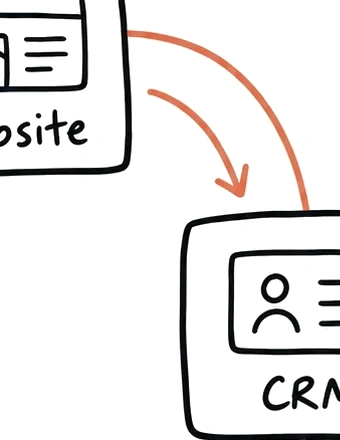
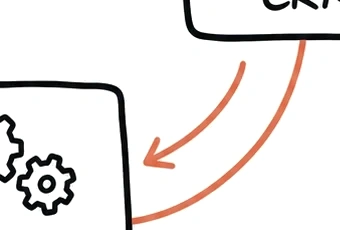
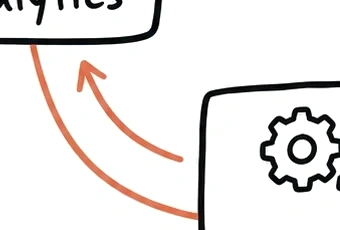
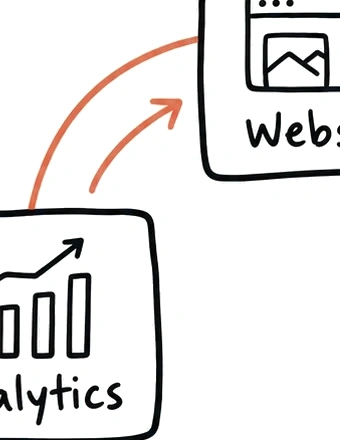


Nine jobs.One point of contact.
Most businesses hand these to nine different people. On a fractional engagement they’re one system, built and run by the people who know how the pieces connect.
Design
Interfaces and visual systems built for your brand and for conversion: layout, UI, UX, and the components that carry them.
In scope: UI/UX, visual system, components

Web development
Sites built on Webflow, where I'm a Webflow Certified Partner, or headless sites on Astro with a headless CMS, chosen for what the site needs to do.
In scope: Webflow, Astro, headless CMS
Campaigns
Landing pages for each ad, offer or launch, built from the same components as your site and tracked from the first visit, so you know which campaign brings enquiries.
In scope: landing pages, tracking setup, performance review
Forms & CRM wiring
Every form sends its lead to the right place, with the right fields, into the CRM you already use. No copy-pasting, no leads lost in an inbox.
In scope: form setup, routing, data flow into your CRM

Automations
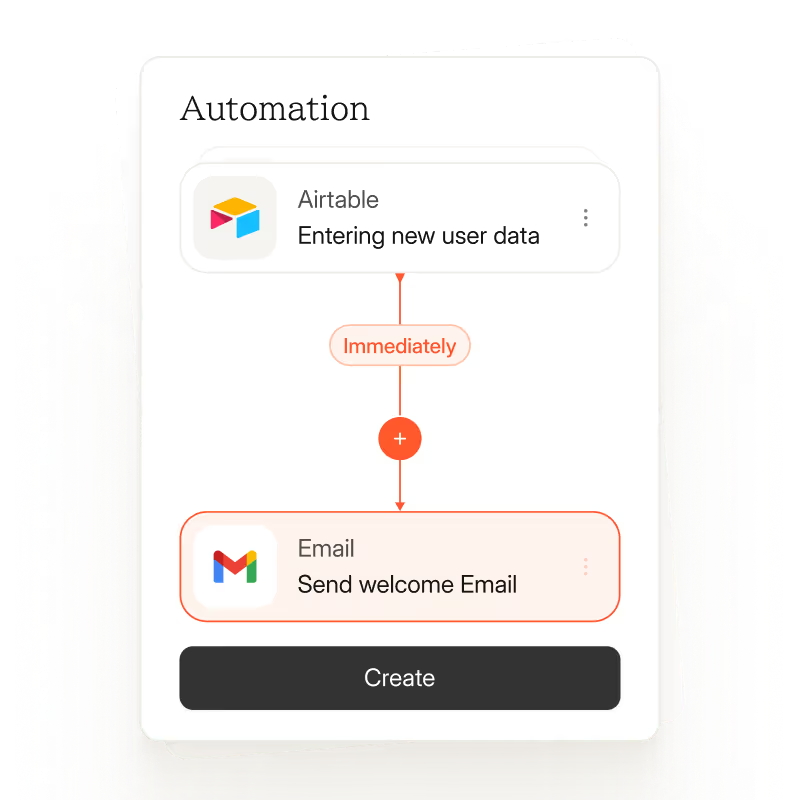
The repetitive steps between your tools, done for you: welcome emails, notifications, list updates, handoffs to sales.
In scope: workflow design, build and upkeep
Integrations
The tools you already pay for, talking to each other, so data is entered once and shows up everywhere it’s needed.
In scope: connecting your existing stack
SEO & AEO
The technical groundwork that helps search engines and AI assistants find, read and cite your site.
In scope: schema, site structure, crawlability, llms.txt
Analytics & reporting
Tracking that’s installed correctly and reports you can read, so you know which pages bring in enquiries.
In scope: setup, event tracking, regular reporting, GDPR compliance
Optimising
A/B tests and small, measured changes to headlines, forms and pages, shipped once the result is clear.
In scope: A/B tests, experiments, conversion review
One engagement.A steady rhythm.
No project scopes to renegotiate every month. A short list of priorities, worked through in order, with a note every week.
- Step 1
Fit call
A short call to see whether your site, your goals and our way of working match. If it isn’t a fit, we’ll say so.
- Step 2
Audit and plan
We review your site, forms, tracking and tools, then agree the first priorities together.
- Step 3
Monthly priorities
Each month has a short, agreed list of what gets built or fixed. You always know what’s next.
- Step 4
Weekly note
What changed, what it earned and what ships next, every week, in plain language.
Right for you ifyour site does real work.
Leads come in through it, content ships on it, and nobody on your team runs it full-time.
Your site is where the business happens
Not a brochure next to the real product, but the place enquiries, bookings or sign-ups start.
Changes can’t wait for a dev cycle
Prices, pages and campaigns change often, and each change shouldn’t need a ticket.
Nobody owns it full-time
Marketing, sales and ops all rely on the site, but running it isn’t anyone’s actual job.
The right stack.Not the habitual one.
Tools depend on what your site needs to do, not on what’s easiest for us to repeat.
Same design quality, a fraction of the running cost. Webflow becomes the drawing board, not the invoice.
Anthropic, the company behind Claude, runs claude.com on Webflow. If it holds up for the public face of a frontier AI company, it will hold up for yours.
Latest from Insights
Tutorials, use cases and ideas from our team.


Questions, answered.
The things founders usually want to know before we start. If yours isn't here, just ask.

Have more questions?
What does an ongoing engagement cover?
Your website and the systems connected to it: the build and ongoing changes, search and AI visibility, analytics and tracking, and the forms, CRM wiring and automations that move leads from the site to your team.
Each month has a short list of agreed priorities, and every week you get a note on what changed and what ships next.
What is AEO and GEO, in plain words?
They are ways of making your pages easy for search engines and AI assistants to read and cite. It is part of the site work. The exact scope is on our Services page.
Do you run our campaigns or follow up on leads?
No. Campaigns, email sends and lead follow-up stay with your team. I look after the system they run on: the site, the tracking, the CRM setup and the automations between them.
Does this work with the site we already have?
We start with a short look at what you run today, then tell you plainly what we can connect.
Do I need a developer?
We say which parts need one before we start.
Do you only work with Webflow?
Webflow is my default for marketing sites, because your team can edit pages without a developer and it now offers its own analytics and A/B testing. I'm a Webflow Certified Partner.
When a code-based site fits better, I build with Astro and a headless CMS. If your current stack works, we keep it.
How do you handle SEO and visibility in AI answers?
I start with what search engines and AI assistants need to read your site correctly: structure, schema, speed and clear answers to the questions your buyers ask. Then I measure where you appear, including traffic that comes from AI tools, and work on the gaps in order of impact.
What happens before a change goes live?
We show you changes before they go live.
What does it cost?
We agree the scope and the price before we start.
Which CRM and tools do you work with?
HubSpot is my main CRM. Where you already use another one, such as Pipedrive or ActiveCampaign, I work with what you have. Automations run on Make, or on self-hosted n8n when data needs to stay on your own servers. Analytics is GA4, or a privacy-first alternative if you prefer.
What happens if we want to stop, or switch tools later?
Everything is in your name from day one: workspace, domain, CRM and every account I set up. There's no long lock-in, and I help with the handover.
Because the logic between your tools lives in the automations, you can change CRM later without rebuilding everything around it.
Platform Migration to Webflow
This is a test